250 Years of Healthcare: Where We’ve Been—and What the Next 25 Years May Mean for Families
When we look back over the last 250 years of healthcare, one thing becomes clear:
We have become much better at keeping people alive.
That is a remarkable achievement.
But it has also created a new challenge for families:
How do we help people live longer, safer, and with more support—especially when care becomes complicated?
For most of human history, healthcare was limited, local, and often reactive. Today, we have hospitals, specialists, medications, imaging, surgeries, vaccines, home health, telehealth, artificial intelligence, and advanced senior care options.
And yet many families still feel lost when a parent falls, receives a diagnosis, needs rehab, or can no longer live safely at home.
This post is a look at where healthcare has been, where it may be heading over the next 25 years, and why families will need clarity more than ever.
1776–1850: Healthcare Was Mostly Home-Based and Limited
Around the time of America’s founding, healthcare looked nothing like it does today.
Most care happened at home. Physicians had far fewer tools. Hospitals were limited. Infection, childbirth complications, injury, and diseases that are now preventable could become life-threatening.
Families relied heavily on:
home remedies
local doctors
midwives
community support
faith and family caregiving
In many ways, families were the care system.
There was no Medicare.
No antibiotics.
No modern anesthesia.
No nursing home system as we know it today.
No hospital discharge planner calling about rehab options.
There was care—but very little structure.
1850–1900: Germ Theory, Anesthesia, and Surgery Changed Everything
The 1800s brought some of the most important turning points in medical history.
The development of anesthesia made surgery more humane and possible. Antiseptic surgical methods helped reduce deadly infections. Germ theory helped medicine understand that invisible organisms could cause disease.
This changed the direction of healthcare.
Instead of relying mostly on symptoms and guesswork, medicine began moving toward science, prevention, cleanliness, and controlled procedures.
For families, this era marked the beginning of a larger shift:
Healthcare started becoming something delivered by trained systems—not only by families at home.
1900–1950: Public Health Became a Life-Saver
In the early 1900s, major improvements in public health changed the average family’s life more than many people realize.
Clean water, sanitation, food safety, vaccination, and better control of infectious diseases helped reduce infant and child mortality and contributed to a major increase in life expectancy during the 20th century.
This is one of the most important lessons in healthcare history:
The biggest health improvements often come from systems that prevent crisis before it happens.
That same idea applies to senior care today.
When families plan early—before the fall, before the wandering incident, before caregiver burnout—they usually have more options and less panic.
1950–2000: Hospitals, Specialists, Medicare, and Modern Medicine Expanded
The second half of the 20th century brought enormous medical progress.
Healthcare became more specialized. Hospitals became more advanced. Medications improved. Surgery became safer. Imaging and diagnostics expanded. Medicare and Medicaid changed access to care for older adults and lower-income individuals.
This era created many benefits:
better emergency care
more specialty care
improved surgical outcomes
better treatment of heart disease, cancer, infection, and chronic illness
more access for older adults through Medicare
But it also created a more complex system.
Families began dealing with:
hospital stays
rehab decisions
insurance rules
facility choices
discharge timelines
care coordination
long-term care costs
Modern medicine helped people survive more conditions.
But survival often came with a question:
What happens after the hospital?
That is still the question many families face today.
2000–2026: Healthcare Became More Advanced—and More Confusing
In the last 25 years, healthcare has become more powerful, more digital, and more fragmented.
We now have:
electronic medical records
advanced imaging
robotic surgery
telehealth
genetic testing
precision medicine
targeted cancer therapies
AI-enabled tools
more care delivered outside the hospital
more aging-in-place technology
These are incredible advancements.
But from the family perspective, it can still feel overwhelming.
A hospital may say, “Your parent is medically stable for discharge.”
A rehab may say, “They are not progressing enough.”
An assisted living community may say, “We can assess.”
A memory care community may say, “This is probably a better fit.”
Insurance may say, “Coverage depends.”
And the family is left asking:
“Who is helping us connect all of this?”
That is the gap many families feel today.
The Biggest Shift: We Are Living Longer With More Complex Needs
The future of healthcare is not just about treating disease.
It is about managing longer lives.
More families are caring for loved ones with:
dementia
Parkinson’s disease
stroke recovery
heart failure
diabetes
mobility decline
repeated falls
medication complexity
caregiver exhaustion
social isolation
This is where healthcare and senior living meet.
A person may not need a hospital.
But they may not be safe at home either.
That in-between space is where families often struggle the most.
What the Next 25 Years May Bring
No one can predict the future perfectly.
But several trends are already visible.
Over the next 25 years, healthcare will likely become more:
home-based
technology-supported
personalized
data-driven
prevention-focused
senior-centered
and difficult for families to navigate without guidance
Here are the shifts I believe families should pay attention to.
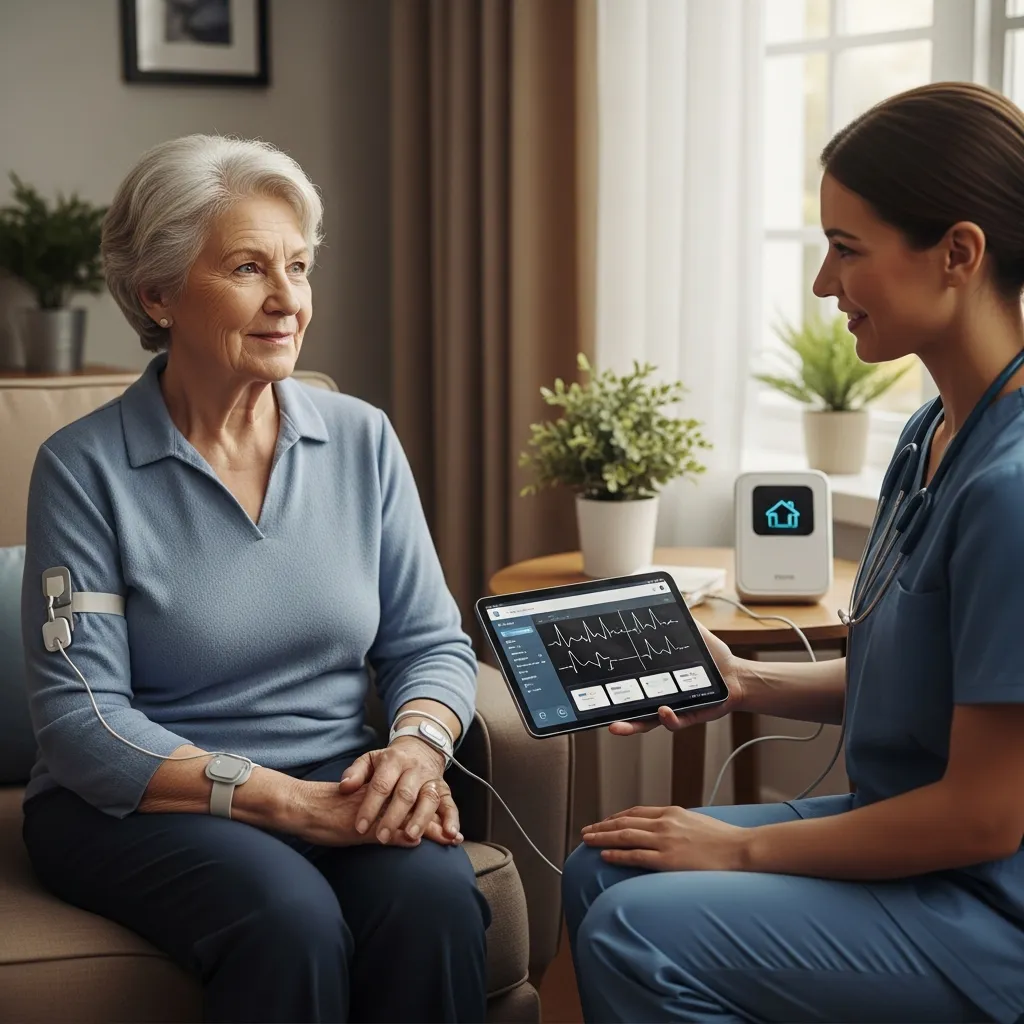
1. More Care Will Move Into the Home
Hospitals and health systems are already exploring ways to deliver more care outside traditional hospital walls.
This may include:
hospital-at-home models
remote monitoring
home-based primary care
mobile diagnostics
virtual visits
home health expansion
wearable health tracking
For many seniors, this could be a major benefit.
Home is familiar.
Home can reduce confusion.
Home may lower infection exposure.
Home may feel more dignified.
But home-based care still needs coordination.
If a senior is alone, confused, falling, skipping meals, or unable to manage medications, technology alone will not solve the problem.
The future question will not simply be:
“Can care be delivered at home?”
It will be:
“Can care be delivered safely at home for this person?”
2. AI Will Help—but It Will Not Replace Human Judgment
Artificial intelligence is already entering healthcare through medical devices, imaging tools, documentation support, risk prediction, and care coordination.
Over the next 25 years, AI may help clinicians:
detect disease earlier
review scans faster
predict decline
identify medication risks
support diagnosis
personalize care recommendations
reduce paperwork burden
That could be powerful.
But AI will not replace the human side of care.
AI may flag risk.
But someone still has to ask:
Is Mom eating?
Is Dad safe at night?
Is the caregiver burning out?
Is this community truly the right fit?
Does this plan make sense for the whole family?
Healthcare may become more intelligent.
But families will still need wisdom.
3. Prevention Will Matter More Than Crisis Response
For the last century, healthcare has been very good at responding to crisis.
But the future will likely push harder toward prevention.
For older adults, prevention may mean:
fall prevention
medication review
strength and mobility support
cognitive screening
nutrition and hydration monitoring
social engagement
home safety modifications
caregiver support before burnout
This is especially important because many senior care crises do not appear overnight.
They build slowly.
A missed medication here.
A fall there.
A skipped meal.
A confused evening.
A caregiver who keeps saying, “I’m fine,” until they are not.
The families who do best are often the ones who act before the crisis forces the decision.
4. Dementia Care Will Become One of the Defining Issues
As the population ages, dementia care will become one of the biggest family and healthcare challenges of the next 25 years.
Dementia is not just memory loss.
It affects:
judgment
safety
sleep
mood
behavior
communication
medication management
eating
wandering risk
caregiver stress
Families will need better education on:
early signs
home safety
sundowning
paranoia
wandering
caregiver boundaries
when assisted living is enough
when memory care is safer
The future of senior care will depend heavily on whether communities, healthcare providers, and families can better support dementia-related needs.
5. The Caregiver Shortage Will Force New Solutions
One of the greatest pressures in healthcare and senior care is staffing.
As more people age, the demand for caregivers, nurses, aides, therapists, and care coordinators will keep growing.
Technology may help.
But it cannot fully replace:
bathing assistance
transfer help
compassionate redirection
meal support
toileting care
calming a frightened person with dementia
noticing when someone is “not themselves”
The next 25 years may bring more tools, but the human workforce will remain essential.
Families should expect staffing, availability, and care quality to remain major decision points when choosing home care, assisted living, memory care, rehab, or supportive living.
6. Families Will Need Better Navigation
This may be the biggest point of all.
Healthcare may become more advanced.
But advanced does not always mean simple.
Families will still need help understanding:
hospital discharge
skilled nursing rehab
assisted living
memory care
home care
home health
hospice
palliative care
Medicaid
VA benefits
long-term care insurance
supportive living
when to sell a home
how to talk to siblings
how to choose without regret
The future will not be won by families who have the most brochures.
It will be won by families who have the clearest path.
What This Means for Families Right Now
If you are caring for an aging parent, the lesson from 250 years of healthcare is not simply that medicine has improved.
The lesson is this:
The best outcomes often happen when people act earlier, ask better questions, and build the right support system before crisis takes over.
That may mean:
talking with your parent sooner
documenting care concerns
reviewing medications
asking about fall risk
comparing home care vs assisted living
learning the difference between assisted living and memory care
understanding how care may be paid for
making a transition plan before discharge pressure hits
You do not need to predict the next 25 years.
You just need to make the next right decision for your family.
A Simple Question to Ask This Week
If you are worried about a parent, ask yourself:
“If nothing changes, what are we afraid could happen in the next 30 days?”
That answer usually reveals the real issue.
Maybe it is a fall.
Maybe it is medication mistakes.
Maybe it is wandering.
Maybe it is caregiver burnout.
Maybe it is another hospital trip.
Once you name the fear, you can build a plan.
If You’re Near Geneva, St. Charles, Batavia, North Aurora, or Aurora
Senior Source helps families across the Fox Valley and western suburbs make sense of senior care decisions when the system feels overwhelming.
Whether your family is deciding between home care, assisted living, memory care, rehab, supportive living, or a care transition after hospitalization, the goal is simple:
clarity, safety, and a plan you can trust.
Brad Esposito – Senior Source
Phone: 630-835-0355
Website: ILSeniorSource.com
FAQ
How has healthcare changed over the last 250 years?
Healthcare has moved from mostly home-based, limited care to a complex system of hospitals, specialists, vaccines, medications, surgery, insurance, digital health, and advanced care options.
What may healthcare look like in the next 25 years?
Healthcare will likely become more home-based, technology-supported, personalized, preventive, and data-driven. But families will still need human guidance to make practical care decisions.
Will AI replace doctors or caregivers?
AI may support diagnosis, monitoring, documentation, and decision-making, but it will not replace the human judgment, compassion, and hands-on help needed in senior care.
Why does this matter for senior care?
As people live longer with more complex needs, families will need to understand care options sooner—home care, assisted living, memory care, rehab, supportive living, and funding paths.
What should families do now to prepare?
Start by naming the biggest risk in the next 30 days, gathering key documents, reviewing care needs, and creating a simple plan before a crisis forces quick decisions.


